Sunday, May 27, 2012

Winnipeg RCMP Forensic Lab To Close


RCMP Forensic Lab to Close on Academy Road


It can be barely seen from its location on Academy Road from the street level but the forensic lab for the RCMP has been tucked in River Heights since 1986. The parking lot there was recently upgraded for the 20 to 30 who work in the building.

The federal Conservative government led by Stephen Harper now sees fit to close the lab which has had a presence in Manitoba since 1970. It is the same lab that provincial Progressive Conservatives under Manitoba Provincial Attorney General Sterling R. Lyon requested the province get to handle its forensic needs.

The lab has survived budget cuts under Mulroney, Chretien and Martin but now under Harper with massive increases in crime legislation, the office gets the cut.

The Auditor General has indicated turn around time has been terrible at the labs but there has been a dramatic increase for their service at the same time.

The Harper government was toying with the idea of privatizing the labs. The plan now is to reduce the six offices to three. Ontario and Quebec have their own provincial labs yet the feds kept Ottawa's office along with Edmonton and Vancouver. The labs that will close are in Winnipeg, Halifax and Regina.

Some defence attorneys are already saying wait times are too long for lab reports. It is hard to see the proof that consolidating the labs and increasing the workload with more crime legislation is going to see an improvement in turn around time.

It is obvious that if evidence has to be flown or driven to Edmonton or Ottawa, it will cost more. The $3.5 million savings might be eaten up in rising logistics cost.

The Manitoba government and opposition have been notably silent so far on the loss of a the lab, high tech jobs and what it means to the province.

The three provinces affected by the closures are small and their pleas for consideration are likely to be ignored given that two of the provinces have NDP governments. The third, Saskatchewan, has a conservative government so it might be interesting to see if there is pushback there that gains traction.

In any event, it is difficult to see how Manitoba can avoid seeing the lab close with a majority Harper government in Ottawa.

My personal view is that the government needs to try to keep the lab. However, if they can't keep the lab a federal responsibility that the Manitoba government take it over themselves.

Yes, you heard that correctly. Given the extreme difficulties of the RCMP over the years. it is high time we considered our own provincial police force. I say grab the lab and do as much forensic work for the entire province here and offer services to private and police interests world-wide.

Sound far fetched? Well, as far fetched as a mint in Winnipeg making coinage for other countries?

Don't take the lab closure sitting down. Either fight it or grab it. However, don't hang the gone fishing sign up while federal services continue to get chopped and then shrug later on when you have an empty building, continued slow turn around on evidence and ultimately no answers on what to do.

It is time we had our own provincial police force and it will need a lab. The Academy Road lab is modern and ready to go. Let's start with that and then move to create a police service for Manitoba.

I have a suggestion: Call it the Northwest Mounted Police.

Friday, May 25, 2012

Where Do You Get Your News? Part 1

Where do you get your news?

It isn't an idle question. And it just doesn't refer to news, sports and weather. Nor does it mean just newspapers, magazines, TV and radio. For many people news is information. However, not all information is news.

The dictionary says that news is selected information based on current events. The earliest news was most likely disseminated orally by those who travelled between communities. Perhaps the first written news was actually government edicts from the Pharaohs in ancient Egyptian times around 2400 B.C. These communique were delivered via a courier system throughout the land.

By the time of the Romans, Julius Caesar, 44 BC to 100 BC, the Acta Diurna was the daily system or gazette for delivering news from the government.

Various nations around the world used the written gazettes to inform the public about what was happening. However, the first newspaper didn't appear till 1605 in Strasbourg. It was called Relation aller Fürnemmen und gedenckwürdigen Historien.

The literal translation for this German language paper is:

Account of all distinguishable and commemorable news.

And so it has gone with news. It is the dissemination of information by governments, organizations and individuals.

The New York Times says it publishes "all the news that's fit to print." That is a lot. And if you work for FOX News, you find what the Times say laughable because they say that only they publish is "fair and balanced."

In Winnipeg, how does one receive news? I would hazard a guess that being the city we are, we look for news that is free first and foremost. That would be television. I always like to point out that TV is hardly free. It requires a device to receive it and to get the best quality signal, you generally have to pay a distributor like a cable company a significant chuck of change. But whatever, people often believe TV is free when for the buck, the newspaper delivers more for less.

So what do we have for news shows on Winnipeg TV? Well, for all intents, we have four news slots in a day. Morning, noon and evening and late night. Not all networks avail themselves of all those times though. City TV, for example, only has a morning program from 5:30 AM to 9 AM. It is cut from the same cloth as Good Morning America in that it is very light on news and is more about information and entertainment. The news segments are basic reports culled from news service or other reporting sources. However, for the longest time it was pretty much the only act going when it came to local morning TV? The Big Breakfast is less about standard news and more community activities.

In 2011, CTV decided that City TV had the mornings too much to themselves and started running CTV Morning Live from 6 AM to 9 AM. They brought in experienced new staff from their local evening news and used them to do more reports as well as follow City TV's format of light entertainment and community programming.

The last entrant in the breakfast programming crowd in 2012 is Global TV's Morning News. It runs 6 AM to 9 AM. It has some experienced news staff on air with one notable addition brought in. They have a traffic helicopter for their reports. This is as tactic used by U.S. local programming to some success.

CBC Morning News runs on the main channel from 6 AM to 7 AM. It is a national news program very light on local content.

Suffice to say that, CBC, CTV and Sun News all have national news programming on their all news channels all day long, Throw in CNN and several U.S. and international news networks. The main U.S. networks run both local and national news and entertainment programs all morning.

However, for our purposes, we will only talk about the local ones here.

For many years, it has only been the City TV offering local news and entertainment in the morning. It is now three stations who actively compete for content to fill three or more hours every day now that Global and CTV have joined the fray.

So what is news can be derived from watching these morning programs? The most likely thing is traffic and weather and maybe quick re-caps of news and sports. Nothing is in depth on such programming but it is enough quick info that maybe useful for someone's day to start. Often times, the morning local programming amounts to a community bulletin board.

If someone wants more depth that than early morning TV, is radio the answer?

Continued in part 2

Monday, May 21, 2012

Donna Summer - I Feel Love (Live)


Donna Summer, Queen of Disco, dies at 63


This song has been rising up the charts again all over the world since.

City Circus On Shaw


City Circus On Shaw


Marty Gold started a new series on Shaw TV's Channel 9 as of May 15 at 9:30 pm. It runs 13 episodes and will examine city and provincial issues. It repeats various times during the week so no danger of missing it in a week.

It is always hard to match the strength of a radio show with what you get on TV.

Charles Adler, Rush Limbaugh and Larry King were all accomplished radio hosts before jumping into TV. It is hard to match your radio format to your radio style. Limbaugh gave up in the 1990s and now his TV appearance consists of him being filmed while doing his radio show. Adler has done TV on and off as a commentator and now has a regular show on Sun News.

Larry King has been able to match a radio style with a TV style and for a long time was part of the national conversation with his CNN show.

Marty Gold's strengths in radio broadcasting are a possible strength in TV broadcasting. I am sure we will see some fits and starts as they find their pace and style. What we see now might not be quite what we have a few episodes down the road.

TV is a visual medium and Gold has promised City Hall and Legislature video. Punctuated with his observations, there might not be anything like it on TV in Winnipeg. Combine things with some interviews and some correspondents and the show might be must see TV.

For those not getting it on Shaw, I suspect it will be available in the days after on a website.

Here's to a new voice on TV on issues affecting us where we live. Hats off.


Saturday, May 19, 2012

One Man Commitee Lowers the Curtain


One Man Committee Announces He is Ending it All

Well, Walter Krawec wasn't that drmatic but he has said that he has decided to lower the curtain on a city blog that was thoughtful and always interesting to read.

I will miss his deep interest in the city around him and the enthusiasm he showed for the subject.

He is correct that there are a number of continuing bloggers and newer entrants every year. Still, it is hard to lose a distinctive voice.

I want more city writers not less as a rule.

My perfect world has writers covering every subject from neighbourhoods to civic-wide issues. I want to hear about that tiny little restaurant up in that neck of the wood. I want to know the history of that building. I want to listen to frustration with politicians, businessment or old man Hubert who has the one eyed dog named Max.

It is funny how fast a knowledge is lost if someone isn't recording it. Think of your own neighbourhood. Is there a school that was once there that is no longer? Sir John Franklin elementary school is now a dog park. I was wondering what year it was knocked down and can't remember. Aside from yearbook pictures, I am wondering if there are pictures of it being built, dedicated, used and then destroyed.

I need that history. I want it.

Dumb as it sounds, I sometimes mention changes in places we are all familiar with because I know I will have a time recalling them as the years pass. I have no shame mentioning Swiss Chalet being built in the city after 15 years absence. It is the single most sought out information on my blog. Ten years from now, I won't have a clue what the history of a particular area was without my notes. It is so easy to let a name slip away from use and fade altogether.

OMC helped reflect the time, the discussion and will add to the colour of the city of Winnipeg. I hope he continues to be part of the conversation in whatever capacity he can. Thanks for being you.

Tuesday, May 15, 2012

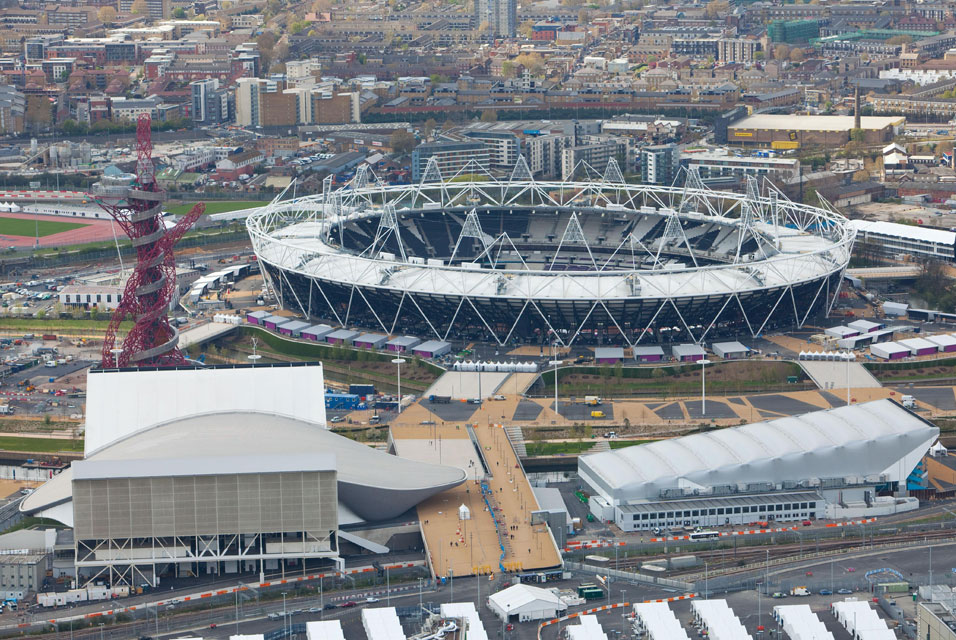
Orbit for London, Grounded for Winnipeg?


The new Orbit Tower in London outside Olympic Stadium

In the days leading up to the next Olympics in London, the city has opened one of the most expensive, largest and tallest exhibits of public art in the world. It will overlook the games stadium and be available over to ticket holders attending the event. In case you haven't guessed it, you can climb it like you would the Eiffel Tower. To be sure, there has always been delight in seeing things from high.

Britain already scored big at the beginning of the millennium with the The Eye ferris wheel. It is the most visted attraction in the country now.

In all the debate about waterparks and stadium, one wonders if Winnipeg might be up for something like The Eye on Parcel 4 or a tower overlooking Investor's Group Field for women's soccer in 2015.

Manitoba and Winnipeg's 150th birthday is coming up: what will be the grand projects that will fire the public's imagination?

Monday, May 14, 2012

Everybody Needs Somebody To Love - The Blues Brothers


Booker T bass player Donald Dunn dies


Seen here smoking a pipe with the Blue Brothers band. His best friend Steve Cropper beside him in the video.

Thursday, May 10, 2012

FIFA Women's World Cup Comes to Winnipeg in 2015


In terms of sports, this ranks up there with one of the greatest moments in Winnipeg history. The announcement that 2015 FIFA Women's World Cup soccer will be played in the city. Now, don't get me wrong, the city has hosted some amazing national and international sports events but this is truly a global spectacle.

The last World Cup played in Germany in 2011 saw Japan win in a incredible shoot out. Monster crowds watched and monster TV ratings ensued throughout world-wide (although only the final games in the U.S. produced big numbers).

Canada, eliminated from the final rounds, still had many people riveted to CBC and Rogers coverage. It was compelling TV and the country embraced it despite having our national team out of it.

The Germans sold out all 32 games played in 8 venues. It should be interesting to note that Investor's Group Field would have been bigger than all but three of the stadiums that hosted the 2011 games.

A lot more excitement will be coming with the games as Canada prepares a team that has done no better than 4th place in the biggest soccer event in the world. After the winter Olympics in Vancouver, there is a realization that to place high requires a ramping up of all that is needed to perform well. The best results ever in those games didn't come overnight and one can expect as much for the cup.

Every teenage girl playing soccer in Canada will no doubt think about the coming games. Some will be good enough to make the team. Parents should be aware that elite athlete training will be kicking it up a notch from here on in.

For the fans, breadcrumbs of the emblem and mascot will be dangled before us. Announcements of TV coverage, game schedules and right at end, team rosters is going to build excitement.

Winnipeg will one of only six cities in Canada hosting the games. The others are Vancouver, Edmonton, Ottawa, Montreal and Moncton. Halifax dropped out when cash strapped Nova Scotia and the federal government refused to put up any money for a new stadium. Shame. I think a new stadium would have equalled a CFL team in the newly muscular Halifax.

As for Toronto, they are cursing these last days about why Winnipeg gets the FIFA Word Cup and they get the 2015 Pan Am Games. How soon they forget. It wasn't too far back that the two time Olympics loser was wondering what event with some world class credentials they could land. Some wondered how Winnipeg was able to land the Pam Ams in 1967 and 1999 and thought: If they can do it, so can we.

Well, now some of the citizenry of Toronto are eyeing the soccer that will be drawing millions upon millions of viewers and wondering if they did't pick the wrong thing to stake their claim to. Can't be helped now.

Nothing Winnipeg has done in sport and sporting events to date comes close to tourist and TV bonanza that the Women' s World Cup will begin.

All it all happens sooner than we think. The private sector and three levels of government need to start getting this right and fast. The entire tourism ad campaign should focus on this when seen across Canada and internationally. Key will be to sell out all the games, then fill all the hotels, all the restaurants and then make sure we treat the media that visits the city for the event like we celebrate like this all the time.

I'm not quite sure the people of the city know just how big this will all be. Even though they are playing out of just one venue, this is the biggest sporting event Winnipeg has ever held.

It is going to be good.


Thursday, May 3, 2012

Bloomingdale's Coming to Winnipeg?


Bloomingdale's Coming to Winnipeg?

The Globe and Mail reported this week that luxury retailer Blomingdale's is in the final stage of talks with The Bay to come to Canada. There is no doubt that The Bay is trying to position itself well before other major retailers like Nordstrom's arrives.

There are three Bays in Winnipeg in Polo Park, St. Vital and downtown. It is the downtown stores that The Bay are trying to shore up first. To that end, it is Toronto, Calgary and Vancouver stores that get some form of Bay and Bloomingdale's combo.

After that, the concept is supposed to be rolled out across the country in boutique style. How much space this takes up in a store or how many stores is anyone's guess.

There is empty space in the downtown Bay so could we be looking at Bloomingdale's there?

Tuesday, May 1, 2012

New Highways for Winnipeg?


The dog park where William R. Clement Parkway dead ends above. Highway through it and all the way through Charleswood?

 The William R. Clement Parkway and future path through Charleswood.


The new road plan snuck in at last council meeting. From Cherenkov's blog


For a city that can't seem to get enough money to fix the crumbling infrastructure that already exists, it is able to somehow designate $300 million for capital spending that was not forecast to begin for 20 years in some cases.

The city and the province often jump the gun and pick and choose targets to fund based on politics. It is hard for councillors to see the benefit of working on things not in their constituency. This isn't news here or anywhere else but it does create future dysfunction.

There is one small segment of a rapid transit system in place. It was built because the federal government said use or lose it. You would think that future dollops of cash would be incentive to continue but federal/provincial money totalling $126 million was basically ignored and that money was spent elsewhere or not at all.

The city cries and cries for more money and they do have a case in that they lead a hand to mouth existence at the doorstep to the province. The fear is that the money given for transit won't be enough to cover the costs of buillding it.

And what about all those urban MLAs who are like just so many potted plants? It is within their domain to do something for the city in terms of its structure, taxation, schools and education and infrastructure. The often remain silent on critical things within their ridings.

It must be fairly amusing to MLAs who completely outnumber city councillors that they can blame the city for failures and take no responsibility for what is going on, nevermind accountability for it.

The plan of highway construction listed in the map above is a provincial and city push.

Over $200 million has already been spent on a superhighway for the CentrePort project just off the Perimeter Highway. It would appear various levels of government are banking on this having a big pay-off in jobs and growth and want to connect various highways to the site.

Maybe this project is good, maybe a pipedream. One thing is clear though is that it continues to stretch things out even past city limits. And the province keeps feeding the beast by allowing for more sleeper communities just outside city limits as well.

I will focus on one small aspect of the highway extension: The William R. Clement Parkway built in 2002. Originally called the Charleswood Parkway, it was a solution to the problem of the Moray Street/Charleswood bridge built in 1995. The traffic coming off the bridge dead-ended at Charleswood Golf Course and people roared down Haney Street. 

The golf course had been bought by the city back in the 1960s specifically for a highway. Now, I am not sure which part of the city designated the land as future bridge and future highway. Back then, it was St. James, RM of Charleswood and Metro Winnipeg. I suppose it doesn't matter. Suffice to say though that many people in the west of the city wondered when the promise of the bridge would be fulfilled when they had only two choices for crossing to the south: the St. James Bridge and Perimeter Highway.

As beloved as the golf course was, it was always part of long term planning that it was to be used for other purposes. Still, there was resistance and people unaware that this was on the books. Some thought they could stop the bridge and road to preserve Charleswood. Any why not? River Heights successfully successfully fought off long term plans for a bridge at Waverley Street and more traffic down to Fort Garry. Ever wonder why Waverley Street is wider than all the other streets in River Heights? It is because it was part of a planned bridge and road expansion.

The plan was never going to succeed with a mayor living on the street in the 1980s, To ensure that the bridge never happened, the land on Wellington Crescent was sold and a future city councillor's built his house there.

Charleswood had more supporters for a bridge and road than it had in opposition and so by 2002, the William R. Clement Parkway was built over the Charleswood Golf Course. It now dead ends at Grant Avenue. The next obstacle for further highway development is a much beloved dog park. That, and a strip of forest land behind Haney Street and a few other streets of Charleswood is all that stand to Wilkes Avenue and beyond.

The estimate for this and other projects are $300 million. Where is the money coming from in anyone's guess. Infrastructure like the St. James Bridge will fall into the water if they don't set a deadline for the work soon. And Kenaston is a disaster. Not to mention street after street in the city.

The city charged ahead with so many projects in the 1970s and 1980s that they ended up borrowing and paying high interest. The drastic cutbacks of the 1990s and recession created a much more reticent council on borrowing and spending. That might be changing with this new push for highway spending.

The problem the city has now is that there is so much infrastructure to maintain out there and still demand to build more. And the reluctance to build more public transit hurts efforts to build density along those routes and alternates for commuters.

The leadership for solving this insurmountable bill for infrasture is nowhere to be seen. What is worse is that the province is as keen on developing new highways and suburbs as the city is.

Trouble is looming ahead.

Monday, April 23, 2012

Bridgwater 2 - Waverley West


Bridgwater Centre

Bridgwater, this is the subdivision that is trying a few things differently.

The sidewalks for the residential area and the condos and multi-unit dwellings at the gate entrances are indeed a change from past developments.

One big failure of the residential component was not making an all out attempt at geo-thermal heating. The province blinked when they realized they needed a closed system because the water outside was too salty. The province, desperate for funds that the development gives them backed away from geo-thermal. Only a small area of the residential construction will have geo-thermal units rather than the whole development.

I think this just adds to the failure of the NDP government's promises on emissions where Gary Doer said if the government does not live up to the promise that they deserved to be defeated. Well, that was the last election and he wasn't there to face the electorate. And the promise on emissions was glossed over.

Still, there are a few elements of the development that are different that are worth considering. The Bridgwater Town Centre is being incorporated into the design of the subdivision running between the extension of Kenaston/Route 90. The development will include commercial, residential, retail and office space. By my count that is 1000 units of multi-family dwellings in a subdivision that until a few years ago would include none.

This seems important when you look at Whyte Ridge just down the street where there is full on protest about a condo complex going up just outside the fenceline. All cities have had city planning lest they want to have something like the Great Fire of London. Completely unregulated organic growth can be as bad as rigid planning. It is a balancing act and the repugnance for some about suburbia has to be measured by needs and wants.

If you don't build a subdivision you risk migration to areas just outside the city that might only be too willing to build. Impossible? Well, we see the province allow it every year and see it tax our road and infrastructure along the way. Winnipeg's urban planning is not just a city responsibility but a provincial one. And the province has shown an inclination to to let exurbia grow and grow. One wonders what our urban MLAs are doing. They outnumber our city councillors yet don't do more to ensure that the province makes sure that it doesn't contribute to poor planning.

In any event, the city competes with surrounding municipalities who have the province's blessing to build pretty much on city limits. The city of Winnipeg's response has to be to use land it has within its limits to suit the needs and wants of the citizenry while not overtaxing the system. It isn't an easy task and people in older areas of the city often feel anger at those in newer areas who drive through their neighbourhoods at high speed to get home. The division between urban and suburban grows greater. The Bridgwater Town Center could address the issue of a better mixed use than we have seen in a long while. There will always be architecture sneering. However, neighbourhoods evolve over years with expansions, paint, roofing and what might have been similar at the start, is not what it is now. Witness Wolseley and River Heights. It is difficult to see how Kenaston will split off and head down to the Perimeter in this development but the pictures above show that the town center is to between the split. Some have criticized this and there may be some justification if it isn't easy or safe for people living in the center to cross the road and access trails and sidewalks. Jury is still out on that one. However, in principle, it looks good and could be a useful density to ensure transit has a hub to work from.

 Kenaston remains a problem for the city. I don't blame Bridgwater for that. The blame lies with the city, the province and to some extent, the federal government for not investing in infrastructure and transit. I have be-moaned the loss of the CN line in River Heights and St. James as a huge loss for north south pedestrian and bike traffic. Short sightened, selfish and plain wrong resident of River Heights now have condos along that line. The smugness that once existed about foiling a low impact bike path but seem fairly bitter now. Once again, let's look at Bridgwater with its bike paths and pedestrian sidewalks. Now, which subdivision has it right and which one has it wrong?

So, for the time being, I look at Bridgwater and have no major beefs with it.

However, to the city I say: Develop and finance a good transportation and infrastructural plan for the city or risk electoral wrath.

Thursday, April 19, 2012

Victoria Secret to Open in Polo Park


For some time Victoria Secret has wanted to open in Polo Park. As leases comes to an end for other retailers, especially Canadian ones, U.S. retailers have moved in hard

The closing of Victoria Secret's sister company La Senza Express was a good indication that something was afoot as well as moving signs for Cleo's and Ricki's.

Expect sometime in the summer once the above stores have moved for a fairly large Victoria Secret to open.

And the makeover for Polo Park continues.

Monday, April 16, 2012

Lowe's Coming to Seasons of Tuxedo


Overhead view of IKEA under construction
Back in March, it looked like the cat had been let out of the bag about the next retailer to move into Seasons of Tuxedo.

In March, Montez Core Income Trust bought 40% of Seasons of Tuxedo. In the process, they made this announcement:

Located at the corner of Sterling Lyon Parkway and Kenaston Boulevard in the city's southwest quadrant, it is a planned 1.5 million s.f. project on just under 200 acres. This is a new greenfield development and the Fund is participating in the southern half of the project which is an 834,000 s.f. outdoor centre shadow anchored by a 395,000 s.f. IKEA, a 77,000 s.f. Cabela's and a 100,000 s.f. home improvement retailer.


Um, the only official announcement has been Ikea and Cabela's.

Now, just down the street and both a Rona and a Home Depot sooo.. it won't be either of these big boxes going in.

This leaves Lowe's. We are the only province east of Quebec without one.

I won't say Menard's because I don't think they could open in the city without a distribution center for Canada.

So, you heard here first: Lowe's coming to Season of Tuxedo.

Inspiral Carpets - This Is How It Feels

Wednesday, April 11, 2012

Violent Reaction in Whyte Ridge


The Southwest Corner of McGillivary and Dunkley Street

Look into the background and you can see Whyte Ridge. It is way back behind a fence.

A condo complex with no entrance into that subdivision warrants a 500 person petition and a verbally violent committee meeting where the police might have to intervene. Am I getting this right?

Assiniboia Community Committee of City Council - Councillors Paula Havixbeck, Grant Nordman and Scott Fielding approved a condo complex that seemed to go out of its way to ensure that it was not offensive. The step of having no entrance into the sub-division was a huge step. All traffic will enter and exit via McGillivary.

Now, I do have some thoughts on McGillvary. It is turning into a speedway to even further exurban subdivisions. Despite a recent widening, it may prove to be a bit tricky for left turns in.

However, one thing is obvious: Whyte Ridge's four lanes in and out to McGillivary is unaffected. They have controlled access to the McGillivary at Columbia Drive. They also have an entrance with lights to Kenaston at Scurfield.

So what is the concern of Whyte Ridge about a condo outside the fenceline and and away from its major traffic routes? Well, according to some people, it is a monolith looking into their yards? Really? I count maybe four or five house on Breckenridge Close and a few on Scurfield that are even close to the development. And these are pie-shaped lots with very large backyards.

How could a condo set back from the fence and houses set back from the fence upset one another? Even landscaping seems to be included that would mitigate consequences of overseeing one another?

It is hard to believe that Whyte Ridge wants a commercial development on the site. That is a realistic possibility given a movie theatre or Shopper's Drug Mart are down the street.

And what about runs past Breckenridge? It is high powered lines and a railyard? Aren't those far worse for the neighbourhood?


The old rail and Manitoba Hydro lines running past Whyte Ridge.

The site where the condo is getting is a mix of scrub bush, dirt or gravel road and a house and out buildings. It has a rural/industrial feel. And honestly, so close to Kenaston and being on McGillivary, it is hard to imagine it staying the way it is.

Perhaps, the residents of Whyte Ridge would like human remains to be kept there? No? Well, looky what goes up down the street next month.


St. Gianna's Church at the Corner of McGillvary and Columbia Drive

St. Gianna's Church goes up in a month. It is a $11 million Catholic Church with...

It will feature the first Columbarium Crypt in Canada. Yes, you read that right. A crypt. Of human remains. Beside Whyte Ridge.

Moreover, this is just phase 1.

Just imagining the cars involved. And those cars will be using an access point to Whyte Ridge.

There were no 500 person petitions against this church right up against the fences of houses in the community?

It is no wonder that city councillors were not swayed by extremely angry and possibly violent citizens. If this condo project could get turfed outside the fenceline, what next? Close the church? Pull the rail and hydro lines?

Come on Whyte Ridge? This isn't even inside the fenceline to your subdivision.

This reminds me of when The Keg got chased away from Waverley by Linden Woods residents because of people saying the smell of steak cooking across the street *opposite* the fenceline would make dogs nuts in the neighbourhood. I kid you not. That was what was in the meeting and Councillors backed down like a dog with its tail between its legs.

I hope the full city council takes the hysteria into account and ignores it. This project is not the end of the world for that neighbourhood.

It makes me think how smart it is to put condos and apartments in as a neighbourhood is being built as we are seeing in Bridgwater now.

Let this project be built. I'm sure that people now will be embarrassed later on about how they overreacted.

Thursday, April 5, 2012

Bridgwater - Waverley West


Back in 2009, some critics of Waverley West were giving an earful about the slow development of the area and that demand was not there and it was simply drawing people from elsewhere. With only around 75 housing starts there and no firms stats on just how much the city was growing, it was a fairly easy conclusion to make.

Winnipeg's slower growth, it was assumed, was going to mean that any new neighbourhood built was going to de-populate established neighbourhoods and contribute to sprawl. There was evidence in the 1980s and 1990s that this was happening.

What the statistics show is that Winnipeg's population is indeed growing and at a faster pace that we have seen in decades. This has led to demands for more housing. The changing demographics also have altered in some cases what sort of housing people are looking for. The biggest example of that is Waterfront Drive where no population existed a few years back and where the next census is likely to reveal thousands live there now.

Now, I am going to get into the overall and sometimes divisive debate in regards to urban versus suburban versus exurban versus rural. Suffice to say, it is difficult to to tell people where and how they can live. Truth of the matter is that even the oldest neighbourhoods started off as developments including Point Douglas. A great deal of thought needs to go into how the city develops because a too heavy handed approach will be ignored and a too light approach will result in a Sim City meltdown of the community.

The attractiveness of Point Douglas from early on, for example, was diminished by the quickly rising wealth of the city and an increase in house size.

This has been a trend that has manifested itself decade after decade although some evidence suggests that the trend could be changing due to an ageing population, smaller families, expense, transport energy cost, cultural mores and a whole host of other factors.

As mentioned, changes in people needs and desires is a moving target. And this has meant that a need and a desire for a development like Waterfront Drive arose.

The breakdown of Waterfront Drive home-owners is young professionals, people who have sold larger primary homes and want luxury but not on the size scale they might have had in Tuxedo or Linden Woods and lastly, people who work downtown.

However, this is not about urban versus suburban. It is about needs and wants in the population and how to manage those desires in terms of planning and costs.

The one thing I will say is that the government must ensure that the costs of such neighbourhood expansion are built into the development or it will not sustain itself and end up costing money later on. In other words, if taxes shoot through the roof as they did in the 1980s, there will be an inevitable exodus of tax dodgers running to places just outside city limits.

However, if you don't address the needs and wants of the population with a development they like, you may also have an exodus of people outside of the city jurisdiction. And if poor city planning turns existing neighbourhoods into speedways to the suburbs, the older neighbourhoods will lose desirability and possibly become run down.

There is an element within the city that wants a sub-division like Bridgwater. It is no use getting angry at people who don't want to buy a re-sale market home, want a yard, want something new and so on and so on. The psychology of this is well documented if not well understood by those who don't share the thinking.

So, it is a balancing act for a city to provide disparate people who have various incomes and several needs and want, the right make-up for a successful community.

In terms of Bridgwater, the expense of getting there is not fully costed. Route 90/Kenaston has not even given a budget for replacing the St. James Bridge or expansion of the road to three lanes in each direction. Already, tens of millions has been spent on expanding around Kenaston Commons and Ikea. All told, it may that costs climb to few hundred million. That isn't just idle talk either. The cost of a road construction as a rule of thumb is $1 million per kilometer. Add the cost of the bridge is and it is huge money.

Why bring this up in relation to Bridgwater? Well, the success of the place could and will be affected by people trying to get in and out of there. If everything bottlenecks, there will be a rising fury about it and people may just decide to bypass the area for housing, shopping and recreation.

The synchronized lights have rarely worked since being installed and more and more traffic lights go up all the time. More businesses have gone up in the business parks along Kenaston all the time. Canadian Western Bank is under construction by Tim Horton's in the GoodLife Fitness parking lot. It is a zoo in the that area every evening.

So, back to Bridgwater...

It is proceeding rapidly now. Just how fast? Well, I see clients with street names listed that I don't have a clue where they are. You can't even Google where they live since it was just a field a few months ago.

And what of the development itself?

What special attractions does it offer that will inspire the same loyalties we see in those who live in River Heights, Charleswood, St. James, Wildwood Park or Transcona?

For example, River Heights has its stately homes and tree-lines streets, Charleswood has the ditches, gravel roads and rural feel, St. James was the first to have winding roads and larger yards, Wildwood Park with its backlanes and front of the house facing a park and Transcona with its affordable homes and community ties.

Well, it would appear that the the winding road one might expect in Linden Woods and Whyte Ridge are there. Likewise, the lakes and parks with trails. However, the community also has sidewalks for the streets which have not been in style in nearly fifty years. A component of green space forest exists and trails runs through it. And like a lot of suburbs, fencing and berms for sound and visual privacy surround the neighbourhood.

So what else is new? Well, unlike its suburban counterparts, there are condos and townhouses within the fencing of Bridgwater. The big fights about a condo going up in Linden Woods are not happening here because there multi-unit buildings are up even before the regular housing is. Significantly, the condos are up near the entrances to the sub-division. If residents do seek to use transit, there may be numbers to support it just outside on Waverley.

One of the things promoted in the development is the idea of a town center. Most suburbs shun anything of the kind. A few critics have scoffed at the whole thing.

To be continued in part 2.