Showing posts with label First Nations. Show all posts

Sunday, October 1, 2023

Washington Post Story October 1, 2023 on Prairie Green Landfill

Unifor's message on Red Dress Day October 4

https://archive.ph/20231002000903/https://www.washingtonpost.com/world/2023/10/01/canada-prairie-green-landfill-search/

Friday, October 21, 2022

Assiniboinia Residential School in River Heights 2022

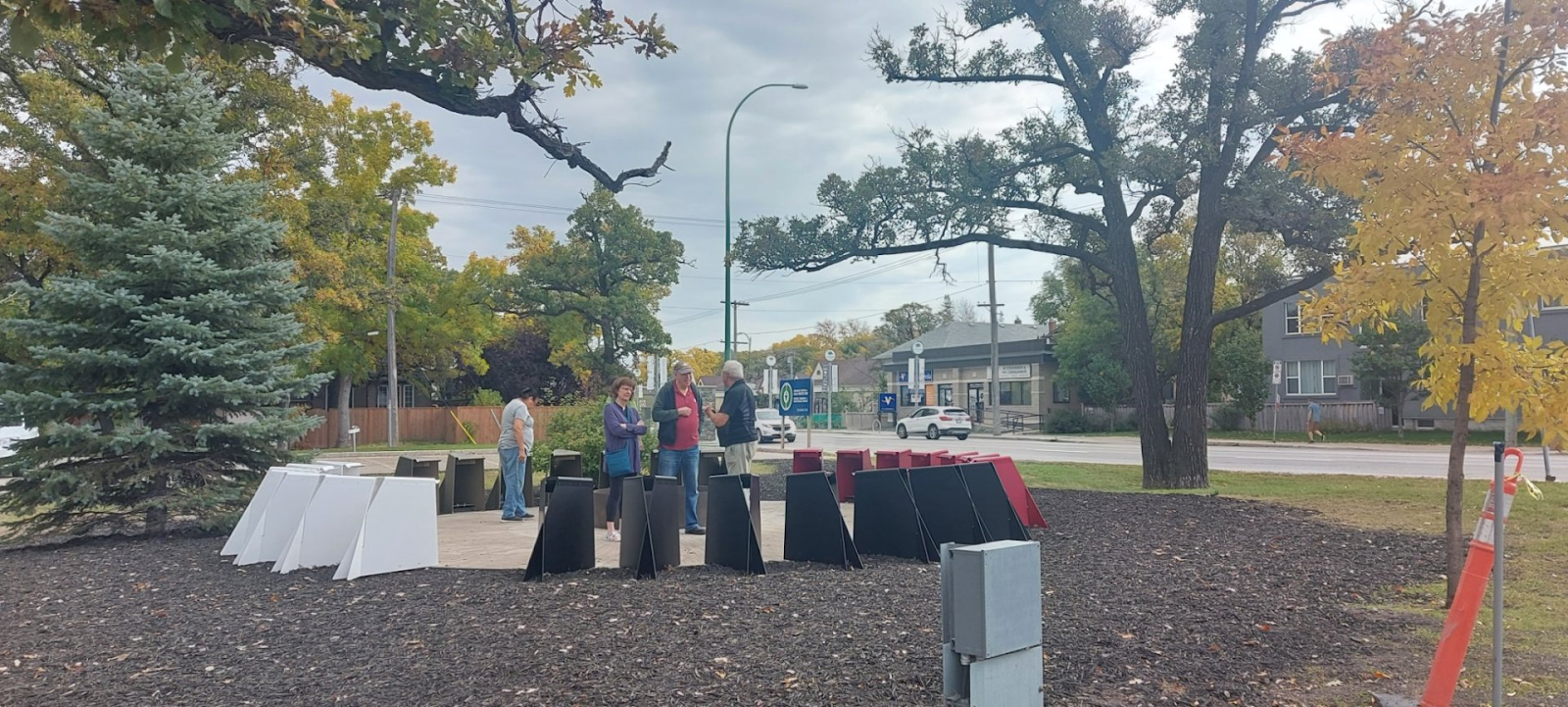
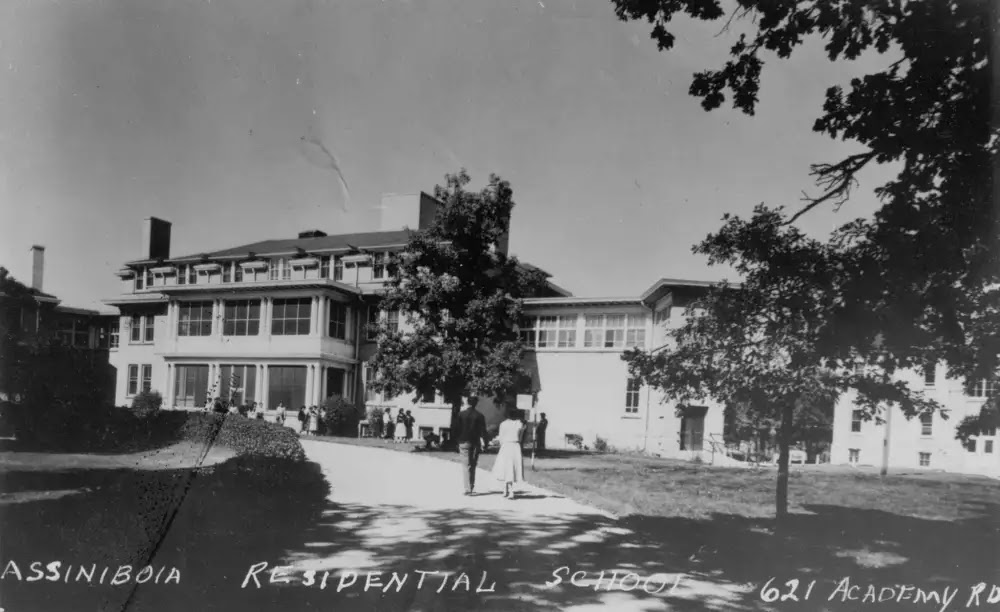
Just before Thanksgiving, I went to visit the Assiniboia Residential School Commemoration and Gathering Place at 621 Academy Road. It was a Catholic High School run by the Grey Nuns that operated from 1958 to 1973. By the fall of that year, I was about to enter Grade 3 and the school was closed. From 1970 to 1973, it was largely a day school as no one stayed overnight anymore. Most in River Heights really didn't know much about the school or the residential system.

Our family moved in in 1968/69 on Renfrew Street, none of the kids yet in Kindergarten. We moved to Kingsway in 1970 and my first year at Sir John Franklin Elementary school. There was not much Canadian in my curriculum materials. Dick and Jane talked about a President, not a prime minister. It was just 25 years after World War II and the one book in the library on the war was written by an RAF pilot on the Battle of Britain.

If this was my experience, imagine my parents. In the 1960s, we had under 10% go on to higher education whereas the U.S. was nearly 30% and rising fast. Vocation, technical and professional training was far behind. It was only in 1970 when it was mandated that teachers have a professional credential. The Canadian flag as we know it now only began to fly five years earlier.

What history education we did receive about Canada was about explorers and discovery of Canada by Europeans including Sir John Franklin, the school namesake. I got more education about Canada listening to As it Happens on CBC Radio from Harry Brown starting in 1968 and later joined by Barbara Frum than any schoolbook material available. As a five year in Kindergarten at Sir John, I didn't have a bike or could leave my block.

And yet, I knew about the Indian School in 1970 on Academy Road. We drove past it often headed to the St. James Y for swimming lessons in the one car the family had, a VW Beetle. It had become a day school by then but I vaguely remember being told it was much older kids and that nuns had lived there. My knowledge of nuns was limited to the Sound of Music from 1965. I heard the music much earlier than seeing it at Rainbow Stage or on TV. But at 1970, I had a certain image of what a nun looked like.

My first home as a newborn was downtown in the Ambassador Block. As my sister and brother came along, we moved to rental houses in places like Elmwood and such till settling in River Heights. By 1973, the Indian School closed. As an 8 year old, it was bewildering. My parents had no insight into it at all either. By the time I was able to ride a bike to places like Assinibone Park down the monkey trails, it was past an empty school building that stayed that way for decades.

It was not until I was well into university that that I heard how widespread and abusive the residential school system was. The first apology came from the United Church in 1986. Government apologies would not come till 20 to 25 years later. And action is still in progress. The public often only experienced the effects of the system and not the cause. It is why the discovery of all the graves this short while was a shock to the much of the Canadian public.
My family lived in River Heights for fifty years and I love the area to this day. On the Friday before Thanksgiving, I went to the memorial on Academy Road. As luck would have it, an Elder from the school was there. You can see him in the picture above. He spent his high school days on Academy and was able to tell me everything about the days before 1973 and I was able to tell him everything that happened after. And in 2022, it all came to together.

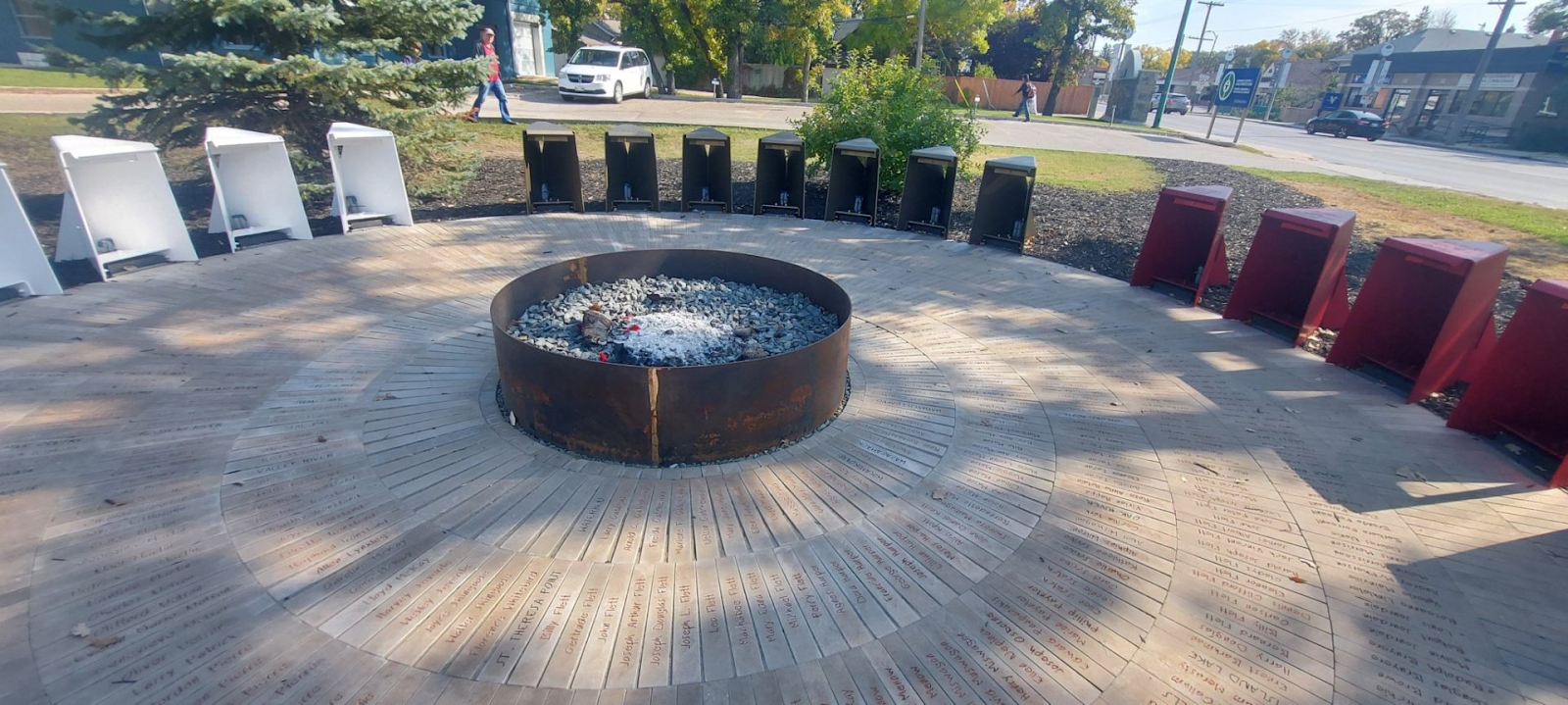
Inside the circle is a list of every community that had students come to the school. And on paving stones, the students names were written. Many names are yet to be added. And more done to the memorial in the new year including lights, landscaping and if lucky, benches for Elders who need somewhere to rest, to contemplate. The Elder and his sister, also an Elder, showed me their names. They showed me people who had passed away, some who struggled and he showed me lots who succeeded. 

As far as anyone knows, and this was from the Elders, no one is buried at Academy. And no one died there. But many struggled and died as a result of the trauma which we learned in detail from the Truth and Reconciliation meetings.
This was not a somber visit. It was a beautiful day, it is an amazing memorial and the Elder was full of information and stories that I was happy to hear. He laughed a lot. I told him how tobogganing and baseball had been long time activities after 1973.
It is worth a visit and with luck maybe an Elder will be there as well. The only way to know history is for the story to be told. And the reason history is taught is because it can tell us a lot about who we were and what we would like to become.
I know I will visit again. I can't wait to see it lit up. 

Saturday, January 7, 2017

Manitoba: 2016 Our Not So Horrible Year?

It was a depressing year for some people across Canada and the world. A lot of factors probably accounted for it. Elections don't bring out the best in some people. The economy remains mixed. War mars several areas of the world and refugees suffer for it. A number of beloved artists in literature, film and television have passed away. Many people have had personal family, work and other challenges this year that have left not at their best.

A recent poll asked Canadians how they felt about 2016 and the only place that had signs of positive belief was in Manitoba. So what would account for a annus mirabilis versus a annus horibillis? The poll didn't drill down into why Manitoba polled differently. Did Manitoba suddenly have a soaring economy? No. Did Manitoba have the best year ever for weather? No. We did have a good year in arts and sport. It was another solid year of festivals. But did this all contribute to us being more positive about things than others?

No one can really know all the factors of each individual person in the province. For some who lost a loved one, it could have been a truly terrible year. Lost a job, relationship problems, health issues can all have an affect.

In general though, let's speculate on why Manitoba might be feeling a little better about 2016 and positive about 2017.

1. Economic growth. The province has seen growth that is tangible in that people are seeing construction, new businesses open and more people working and seeing paychecks. RBC confirms they expect Manitoba to take lead on GDP growth in Canada.

2. Population growth. October to this past October was highest growth in Canada for population. People can see it in the streets. It's busy and busy attracts people.

3.Cultural Strength. Most festivals continue to show resilience from JazzFest to Country Fest and from Folklorama to Folk Festival. The organizers, programming, volunteers and attendance made the province attractive for things to do almost every weekend. And let's not forget theatre, ballet and dance.

4. Sports. Jets didn't make the play-offs but the draft produced one of those rare talents in Patrik Laine that excites everyone in the NHL. The Bombers did make the CFL play-offs and had a great final half of the season. We'll be still debating that last field goal attempt for years to come. The Goldeyes won the American Association Baseball championship in a very exciting season! Our curlers always make us proud as well. Lastly, the amateur athletes at every level and age and sport find support and interest from an abundance of Manitobans.

5. Politics. A new mayor of Winnipeg and a new premier of Manitoba took over the province and while there are inevitable criticisms, they remain relatively popular. An initial sense of renewal marks the the beginning of the mandate. It probably helped that there was no spring flooding or extreme forest fire season that would have represented major challenges to government. People seem patient within reason to let the leadership figure out a path in 2017. A new PM federally also seems to remain generally popular early into his mandate.

6. Family. Every year families go through life, death and change but anecdotally, it seemed more people were doing it together and coming together. For decades Manitobans have spread themselves across the continent for opportunities and employment but a lot seem to have been attracted back because of family. It helps fuel much of Manitoba's present optimism.

There are sore points to be sure. The Pas and Churchill had a horrible 2016. Glimmers of hope are there but it was a bad year. First Nations life remains the challenge of the province in terms of making concrete improvements. Deficits. The problems of service, spending and taxation never go away. Crime. Still too much of in Manitoba. Substance abuse. Drugs and alcohol plague the province and the county in general. De-criminalizing marijuana is coming but Manitoba still has basic issues with alcohol abuse and with fetal alcohol exposure. It is not difficult to see how some of the bad issues appear to be has linked together as the good issues.

What Manitoba does not appear to be is anxious or overly upset the way other jurisdictions are. That could change but for now 2016 was not bad and 2017 would look to okay so far to denizens of the province.

Happy New Year!

Tuesday, April 15, 2014

New High School and Dorms for Lee Boulevard Waverley West

South East Collegiate 
Back in October I pointed out how much development was happening opposite the Waverley West lands near Lee Boulevard. I pointed out then that a major condo development was slated to go up on the corner of Waverley and Lee.

I also indicated that Lee Boulevard had become a centre for First Nations health and education through the South East Tribal Council. A high school as well as personal home centre have been in place from 1995 and 2011 respectively.

Field where new school will be built
The latest news is that the high school will be re-locating to a spot just in front of the personal car home. It is possible the thinking is of having more students attend the school as it will come with 156 two bedroom dorms. The present population of the school is 160 students. By my reckoning that will really increase the amount of students in the school.

School site
 Meanwhile, South Pointe and Bridgwater are no where near approving a school to be built for high school students.

The issue of traffic along Waverley and through the Waverley West area will continue to grow. Expect some woes associated with that.

However, an expanded First Nations school is a good thing.

Monday, January 14, 2013

Idle No More - The Next Moves

Idle No More - Portage and Main - Global TV
The Assembly of Manitoba Chiefs declined to meet with Stephen Harper last week because the Governor-General David Johnston would not be present throughout the meeting.

Over the years, I have heard of similar appeals to an authority higher than the prime minister of Canada. The last one was made in 2009 for a meeting with the Queen in London. She received notice and passed it on to her prime minister in Canada as she always does.

What I have not heard from any First Nations leader is why the Governor General needs to be present or what authority he might have to compel policy changes.

For many decades, it has been standard protocol for a letter of grievance to be presented to the Vice-Regal or Queen which is passed onto her government in Canada.

At no time in our modern history has the Queen or Vice-Regal representatives been present for the nuts and bolts talks of government policy.


The Governor General has an important constitutional role but intervention is only permissible under the most narrow of circumstances.

So the question remains, what type of role do they believe the Governor General can play if he cannot discuss policy lest he risk undermining the Crown's executive, legislative and judicial branches?

Idle No More's main concerns have not always been entirely clear. The vagueness comes in part because there are 600 or more First Nations and a lot list of issues. However, there seems to be agreement that a lot of the present protest motivation comes from two bills in Parliament from the Harper government pertaining to First Nation governance and to water.

The First Nations have every right to ask for a meeting with the prime minister and by all accounts, he agreed to it and future meetings. It was also agreed that a The Governor General would be present at the beginning for the ceremonial process as well as to receive grievances.

This was accepted by some First Nations. It was not accepted by Assembly of Manitoba Chiefs.

Division among aboriginal leaders could not be sharper.

Derek Nepinak of AMC has stated:

(Idle No More) has the people and the numbers that can bring the Canadian economy to its knees.
He has also stated any meeting will be First Nations terms not the prime minister's.

It is pretty strong talk.

So, if the hang up for Derek Nepinak is that the Governor General will not be at the meeting, what exactly does he hope that his presence will do?

It seems some First Nations chiefs will take their meetings with the prime minister and try to get substantive changes or action on their issues.

It remains to be seen how long Manitoba First Nations will be on the outside looking in when it comes to future aboriginal talks. By then maybe the focus of Idle No More might be on the chiefs themselves.

Sunday, December 16, 2012

Kapyong, Kapyong, Kapyong


The battle for Kapyong continues.

It has been characterized in the media again as a victory for the First Nations against the federal government. But it is more complicated than that.

What the federal ruling said was that the federal government must negotiate in a meaningful way with First Nations in regards to surplus land as part of a 1997 agreement. The land claim is not settled. No transfer was ordered. In fact, the judge stated clearly that no transfer to First Nations was automatically in the offing. Further legal wrangling was suggested as being a possible outcome.

In layman's terms, no deal happening yet.

The court says talk. Or appeal to a higher court. We'll see.

The Princess Patricias left the base in 2004 for CFB Shilo. The Liberal government had been in contact with the First Nations in regards to the land from 2001 to 2004 about its disposition. However, it should be noted that Liberal MPs in Manitoba were far more focused on not seeing all of Manitoba's military bases close.

In 1992, CFB Portage la Prairie closed. And in 2001, CFB Shilo sat empty after Germany repatriated training to home territory. They had used the base for thousands from 1974 onward.

CFB Winnipeg's Kapyongs Barracks required costly upgrades and the feeling was that moving the Princess Patricia's to Edmonton to join the rest of the battalion was the best option.

The Free Press mentions that some Liberals were involved in that discussion surrounding the base and the military unit. This is true. However, let's not forget the timeline. Lloyd Axworthy left Ottawa in 2000. At no time would he have had the chance to discuss what was to happen to Kapyong. Ron Duhamel died in 2002 and was sick in that year. Rey Paktagan lost his seat in 2004, the year the Princess Patricia's left the barracks.

My understanding is the latter two Liberal MPs were part of the caucus push to save the military presence in Manitoba. And to that end, they were successful in halting the transfer of the Princess Patricia's to Edmonton along with the area MPs Reg Alcock and Anita Neville.

There were some preliminary discussions in regards to the lands from 2001 to 2004 between but no one was sure exactly how much land might be available or might be absorbed by CFB Winnipeg's military air unit. In other words, the thinking was that some of the land would become surplus but the houses and possibly Lipsett Hall would still be needed by the base. And in fact, that has been the case. Many of the military houses are in fact occupied by Royal Canadian Air Force members.

Lipsett Hall was used up till 2009 by Canada's national volleyball team.

It is fair to say that no discussions of any kind took place in 2005. However, it can also be said that the Liberal government at the time was not attempting to sell or transfer the lands either.

Or were they? If we accept that the 1997 federal obligation was to negotiate land settlements for surplus land and that Kapyong was declared surplus in 2001 with final departure of the military from the site in 2004, how is it that part of the base was transferred to the city of Winnipeg in that year for construction of the Kenaston underpass?


 Kenaston Underpass, land transferred to the city in 2004

If you examine the picture above, you will note that land on both the west and east side was transferred to the city for the underpass.

Now this was Reg Alcock's main infrastructure project and it required land from the military base to achieve it. Additional lanes were carved out of the east and west side of the base. The underpass cost $43 million and built between 2004 and 2006.

Now my question is: If the base was declared surplus in 2001 and the military left in 2004, how is it part of the base was sold to the city that year? Who was paid for it? The military? The federal government? No money changed hands?

Now, I am not arguing against the underpass. Anyone who waited for two trains to pass only to get hit by a third train probably fully understands why the need was there. But how was the land made available?

If it was so easy to transfer land without dealing with surplus land issue, why couldn't the city get three lanes each way all down Kenaston?

The only conclusion I can make is that the land was kept off the books when it  transferred to the city. Because in all honesty, shouldn't the land have been part of the overall surplus Kapyong property?

Makes for an interesting legal argument, doesn't it.

But let's get back to the Free Press and Liberals in regards to Kapyong. At least one of the Liberals mentioned could have had nothing to do with Kapyong being declared surplus and other two were out office by 2004 while the base was still in use.

If Reg Alcock were alive, it might be revealing to ask how Kapyong land was extracted for the underpass.

By 2006, the Liberals were out of office. Why did nothing happen with the base in 2005? My only conclusion is that everyone was distracted by the impending election. And with the underpass under construction through till 2006, it is possible the Liberals didn't want questions about they sold part of the base already under our noses.

It is only in 2007 when the Harper Tories began the transfer of the base as a whole to Canada Lands without consulting the First Nations that the real proverbial pile hit the fan. Unlike prior Liberal and Progressive Conservative governments that signed agreements to transfer urban lands to First Nations, Vic Toews sought to sell the land as strategic land rather than surplus land.

In the end, the court in 2012 believes the government failed in its obligation under Treaty 1 to negotiate meaningfully.

And round and round it goes.

This has been through three rounds in the courts. More could come.

The resignation of the PC Youth president over inflammatory remarks that some say are racist demonstrates the mindset in regards to a possible land transfer of Kapyong to First Nations. Even aboriginal leaders are sensitive to the use of "urban reserve" lest people believe the negative connotations of what reserves are like in Manitoba. Most leaders are careful to indicate that the area would be an economic zone not a transfer of the reserve population from old reserve to new reserve.

To be blunt, the First Nations want the land to generate income.

It remains to be seen whether a deal can be made. The fears are through the roof that Kapyong might be full of crime, protests, roadblocks, poverty and who knows what else.

I don't think it will be but the Harper government certainly is acting like the last thing they want to see is the First Nations get the land.

I think in the end, Winnipeggers want the land used wisely and that the Kenaston be widened. Throw in a service agreement for water, sewer and roads and city politicians should say: "done deal."

Thursday, November 29, 2012

A Deal for Kapyong Barracks Site?


Kapyong Barracks

The base has been empty since 2004 and it was in 2009 that Vic Toews said that it was a done deal that the land was going from Department of Defence to Canada Lands for development. A number of First Nations cried foul and a judge agreed that consultations were necessary as part of Treaty 1 land settlements.

However, this was not the full victory that has been characterized this week by some in the media. The judge's decision was two-fold: He said that the federal government must negotiate in good faith with First Nations and because they hadn't, the feds had to pay the legal costs for both sides. The judge also told the First Nations that their expectation of the land being handed to them directly at no cost was not explicit in the treaty arrangements. He then said the group would have to come back to the court and argue their right to land as well. To be honest, a confusing result that no one could hang their hat on.

In the end, the court told both parties to negotiate a deal and if one could not be reached, the court would hear arguments again this December.

In short, no one knows what the court was about to decide.

The First Nations could have been told they had a chance to make a deal and better luck next time or the feds could have been told they were arguing in bad faith and a deal must be struck by a certain time. And I don't think either side wanted to find out what a judge thought.

The land was once valued at $8.5 million and presently costs $2 million a year to maintain. It is in disrepair and will only get worse. Add to the cost will be site clearance and remediation efforts. Want to know what that might be like? Ask IKEA developers who are in court about what CN Rail left for them.

In the end, it looks like the First Nations are considering an offer for half the land for an urban reserve. No one knows what part of the site is being talked about. It may be this is the more affordable option if the group is buying the land.

From the city of Winnipeg's perspective, they are interested in two things right away: They want to buy land for road expansion for three lanes in each direction on Kenaston. Second, they want to sign an agreement with any First Nation development that will pay for service agreements to the land. In other words, the same settlement that property tax would cover for road, water, sewer and the like.

Understandably, there are questions about what will go up on the land and what sort of traffic might be involved. It is safe to say that and development on First Nations land is likely to center on how much return on investment will be derived from it. And to that end, expect retail and residential and maybe a hotel/casino.

Some of the commentary over the years has centered on fear and racism over what will happen to the site. I think pressure will come from First Nations themselves to make sure the site does extremely well.

Let's see if this deal happens. Some hardliners on both sides may still scuttle the talks.

Here's hoping for a solution...

Sunday, July 8, 2012

The Legacy of Bill Norrie


There is no doubt that Bill Norrie was well liked and generally regarded as a decent man. There is no doubt that he wanted to serve the people of his community.

As befitting of his service as second longest serving mayor for the city of Winnipeg from 1979 to 1992, there has been a rush of praise for the man. I have no problem with that. However, it is also the duty of the press to recall some of the darker moments of that tenure as well.

First elected to council in 1971 and endorsed by the Independent Citizens Election Committee, a right of center political party of Liberals and Conservatives founded in 1921, Norrie was present when the city amalgamated with the surrounding communities to form Unicity. The super council of 50 part time elected officials was carefully guided by the ICEC often in closed door meetings where policy was decided.

It was at this time that Norrie along with his like minded councillors began negotiating a deal for Trizec, a major property developer, to build a tower at Portage and Main. At the time, Norrie was elected councillor, he was present for expropriation of property at the southwest corner that climbed into the milliions by the time it was done.

The ICEC pushed through the Trizec development, the concourse and parkade in numerous closed door meetings and in 1979, shortly before Norrie became mayor, pedestrian traffic was banned from the street in a very long deal with the developers.

The Trizec Building stood thereafter as an example of how not to do things to this day. In the year that Norrie was sworn in, the development was largely unoccupied and had many darkened floors. It also had one of the sweetest city tax deals in the history of the city.

One year into mayor Bill Norrie's term, Winnipeg experienced the most crushing recession in its post war history. The Winnipeg Tribune, Swift's and Canada Packers all shuttered their doors in 1980. The citizens of Winnipeg watched cities like Calgary and Edmonton zip past us in population with Ottawa, Quebec City and Hamilton in quick succession after. Winnipeg experienced and exodus of population the likes of which we had never seen before.

In short, economic prospects were terrible, debt was increasing and borrowing was out of control. Suburban growth was funded with increases on property taxes based on a creaky assessment system. The city was sprawling like never before and the downtown was de-populating and was beginning to resemble a donut.

To top it off, the city was engaged in a language debate that started when a unilingual parking ticket of $5 was challenged by George Forest in 1975. Even a Supreme Court ruling in 1979 affirming language rights was not enough to spur the province and city to translate laws with any haste. For many years, some of the nastiest and vitriolic comments were at municipal and provincial levels and nothing was done. In 1980, another city traffic ticket was challenged and back to the Supreme Court it went.

While the French aspect of Winnipeg of the city was under great pressure from a hostile city response, the First Nations community was near ready to boil over. It is hard to fathom an examination of city politics and Bill Norrie without talking about the shooting of J.J. Harper in 1988.

The chief of police, Herb Stephen, cleared the officer almost immediately. This rather hasty move exposed the city to criticism of racism, police misconduct and cover-up. A raw wound of aboriginal relations was revealed for all to see.

Moreover, criminal police activity in 1981 with the arrests of officers Jerry Stolar and Barry Nielson for murder was still fresh in everyone's minds.

The lack of police reforms and how the chief was selected lay at the feet of Bill Norrie and the council.

The inquiry that followed revealed that the police association challenged the right of anyone to see police notebooks in regards to the shooting. The court disagreed and ordered verified copies be produced.

All through this sad state of affairs, true police reforms were sadly lacking and what should be remembered is that when Norrie left office in 1992, Winnipeg was without a full time police chief when Stephen stepped down in 1991. Outsider Dale Henry was named chief in 1992.

All in all...this period with Norrie as mayor was an extremely difficult time for the city.

There are plenty of kudos that should be listed along with Norrie's tenure as mayor. He did help bring the pandas to Winnipeg (all the while as the Winnipeg Zoo whithered from lack of other investment). He helped bring the Grey Cup game to the city.

And during his various terms, he was involved in tri-lateral work to restore downtown Winnipeg. The highs were The Forks, the lows Portage Place.


Bill Norrie was a genial and hard working councillor and mayor. When a person dies, there is generally a rush to focus on the positive things. However, when he left, the city was in debt, had declined in national standings in population, had no police chief and was in the middle of a biker war. The dissatisfaction with the ICEC and Liberal/Conservative coalition had bubbled over and Win into the 90s was well established and broke the back of one of the longest running civic parties in Canada. When Norrie stepped down in 1992, there was a movement afoot to challenge him at every turn.

It could very well be that if Norrie had wanted to, he could have been in office to his death. Few things can push a sitting mayor out of Winnipeg office. To that end, it is the province that is to blame for that. For some reason, the NDP government believes putting up an NDP affiliated mayor each election will change that.

It won't. What will break the logjam is to allow councillors to run for mayor without resigning their seat unless they win higher office. It is my opinion that if the law was challenged, it would not stand up to constitutional scrutiny.

There is little doubt that Bill Norrie wanted to serve his city and community. He certainly left some legacies to that end. For that, he should be thanked.

Tuesday, August 10, 2010

Casino Expansion Bricks and Mortar and Online


McPhillips Station Casino.


The Days Inn McPhillips soon to be destroyed.

With little discussion, it was announced a few weeks ago that that the McPhillips Station Casino had bought the Days Inn Hotel owned by the Paletta family next door to the casino. The plan on the part of the casino is to tear down the hotel building and to expand the casino and build a connected hotel in the same vein as Club Regent Casino.

By my recollection, the Days Inn next to the casino was renovated a few years back. I have never stayed there nor know anyone who has so I can't really give an opinion about the hotel. I get pretty depressed reading hotel reviews since I think the people most compelled to write are the ones who had poor stays. For the Paletta family, it seems a good opportunity to move on to new projects. They have sold a few hotels and now are building in other parts of the province.

The cost for the casino to purchase the hotel was $10 million. It will cost a whole lot more to build a hotel, casino addition and more parking. The casino officials says that they expect the expansion will increase revenue for the casino.

I don't go to the casinos myself. I have worked them as a volunteer in the past and I do know that many people like them for bingos, the slots and the game tables. And let's not forget the entertainment and food. The power of the casinos as a venue has been seen in the ability to attract Graham Shaw and the Sincere Serenaders to the city again to perform.

I won't go into the difficulties of gambling and addiction. It is an issue that needs to be dealt with but not through Prohibition such as with alcohol. It is always better to regulate than to ban. Further criminalization is not needed in Manitoba or Canada. My feelings are that the social problems of gambling have to be worked on through the Addictions Foundation since the alternative of banning will only push things underground and into criminal activity.

I am not against the casinos nor am I against McPhillips Station expanding. My view is that a hotel and associated changes will be good for the club and its patrons. I do worry that traffic on McPhllips Street will be forever busy though.

And all this brings me to the issue of casinos in Winnipeg in general. Why are they all north of the Assinibone River and east of the Red River? Why these two places and not in the fastest growing section of the southwest?

Mark my words if the government hasn't thought about it, the First Nations have. If the Kapyong Barracks ever does get resolved in favour of an urban reserve, I fully expect Kapyong to possibly host a casino.

It may be years to resolve the issue of Kapyong but the government should consider what cowardice now in regards to the issue of a casino for the southwest could result in later on. Time to have the discussion rather than have it burst onto the horizon later on.

There is one area that the government could do wonders on when it comes to downtown development, the Winnipeg Convention Centre, hotels and parkades and that is by bring a casino back to the downtown of Winnipeg. It is easy to see how bold thinking might be able to redevelop a large section of land near the Convention Centre into both casino, hotel and parkade with links to the present Winnipeg Skyway system.

There has not been a casino downtown since the Fort Garry Hotel. At the time, it was Canada's first permanent casino and helped attract an ownership group that helped restore it to the hotel it is today.

Imagine what a new permanent casino could do for the downtown now. Perhaps a forward thinking government of political party might suggest such a project which clearly could give a boost to downtown tourism.

Lastly, online gambling is taking off all over Canada. B.C. and Ontario are leading the way. The NDP government is leaning towards it in Manitoba. The Tories are leaning against it. I think both had better get their thought processes down on the subject.

Like with a lot of things in Canada nowadays, I think we shouldn't be last to make a decision. There was a time when we were first such as with the Fort Garry Casino. It would be nice to lead again rather than to follow.

hit counter javascript

myspace hit counter

Thursday, January 7, 2010

Shamattawa

I wonder how long the Black Rod will push the suicide angle before he pulls the story.

http://blackrod.blogspot.com/

Shamattawa fire deaths may be linked to suicide

The second body found in a house destroyed by fire early Saturday morning on the Shamattawa Indian reserve will likely be identified as the mother of the missing 11-year-old boy who has already been named as the other victim.

RCMP and band residents know this but are apparently withholding the information because her death may be a suicide which preceded the fire, according to evidence provided in separate news stories from the community
.


There is certainly a tragic story here but the speculation without any evidence is hardly helpful.

The entire line of thinking regarding the daughter has been blown up by the RCMP indicating the second body in the house was an animal.

Several lines of investigation are needed in regards to this death but making up a story to suit a political agenda is not the way to go.

hit counter javascript

myspace hit counter

Saturday, December 19, 2009

Pay on the Reserves


Compensation for public officials is always in the news and rightly so.

There is particular attention being paid to the Peguis First Nation.

The reserve north of the city has about 7 thousand people as members. The pay for the chief and band council easily rivals the highest for elected officials in the province. Heck, they even rival their fellow chiefs and council members in the province.

Many of the councillors earn more than the prime minister of Canada.

Peguis Chief Glenn Hudson has said part of the problem was with the old chief and council and that he has lowered the pay but even at a cap of $170,000, he still rivals elected officials representing far larger populations.

Hudson has said that his education and ability to bring in large claim settlements warrants the high pay. I guess we'll see if that argument sways the vote in the next election. One thing is certain is that poor people on reserves probably can only stomach so much.

This will be a made in Penguis decision regardless. Let's hope that some humility and some sense shakes the elected officials into accepting pay more in keeping with their fellow First Nations.

hit counter javascript

myspace hit counter

Sunday, September 30, 2007

End of September

After a long delay the decision on where Manitoba Hydro will constructs its transmission line from the north has been decided. It will go down the west side of the province rather than the east side. The fate for where the lines would go was probably decided during the election where Gary Doer said he would not run the line down the east side.

The decision to run the line down the west side will cost $400 million and be 50% longer in terms of the line. This will also bring added costs in terms of lost power to the tune of millions.

The east side can now only be reached by air or winter roads. In the past few years, those winter roads have not been around long enough to bring in supplies.

Some of the east side First Nations didn't want the transmission lines. Other First Nations wanted the lines but they also wanted part ownership of them. Hydro refused. Understandably, while some might be celebrating Hydro's decision to go the west, others are feeling bitter.

The issue of economic development on the easy side won't go away. A few winters of bad ice roads could put the communities there in a crisis situation. The Manitoba government could be on the hook for re-supplying by air for decades to come.


hit counter javascript

myspace hit counter